No KYC Crypto Swap: Privacy-First Exchange Guide
A no kyc crypto swap is a cryptocurrency exchange executed without identity verification, account creation, or personal data collection. These services use non-custodial protocols to facilitate direct wallet-to-wallet transfers, bypassing the registration and documentation requirements imposed by centralized exchanges.
The architecture differs fundamentally from traditional platforms. Centralized exchanges hold your assets in their wallets, require document scans and selfies for verification, and maintain databases linking your identity to every transaction. A no kyc crypto swap operates peer-to-peer or through smart contracts, never taking custody of your funds. You control your private keys throughout the entire process.
How Non-Custodial Swap Technology Works
Atomic swaps form the technical foundation for many privacy-preserving exchanges. The protocol uses hashed timelock contracts (HTLCs) to ensure that both parties either complete the swap or get their original funds back. Neither party can steal from the other.
The mechanism works through cryptographic hash functions and time-based locks. Alice generates a secret and creates a hash of it. She locks her Bitcoin in a contract that can only be unlocked with that secret. Bob sees the hash and locks his Monero in a corresponding contract using the same hash. When Alice claims Bob's Monero by revealing the secret, Bob automatically learns the secret and claims Alice's Bitcoin. If either party abandons the swap, the time locks expire and both retrieve their original assets.
Cross-Chain Exchange Protocols
Modern implementations extend beyond simple atomic swaps. Atomic swap technology has evolved to support more complex multi-hop routes and liquidity pooling while maintaining the non-custodial guarantee. Some protocols use submarine swaps for Lightning Network compatibility or adaptor signatures for better privacy guarantees.
The technical constraints matter. Both blockchains must support the same hash function and timelock mechanism. Bitcoin and Ethereum handle this differently than privacy coins. Monero's implementation requires additional cryptographic steps because of its confidential transaction structure. These differences explain why some trading pairs work seamlessly while others require intermediary protocols.
Privacy Advantages Over Centralized Platforms
Traditional exchanges collect passport scans, utility bills, facial biometrics, and transaction histories. They link every deposit, trade, and withdrawal to your verified identity. Regulatory bodies and law enforcement can subpoena this data. Exchanges share information across borders through international agreements.
A no kyc crypto swap eliminates these exposure points:
- No identity documents submitted or stored
- No linking of wallet addresses to real-world identity
- No centralized database to breach or subpoena
- No cross-border data sharing arrangements
- No transaction history tied to personal profiles
The privacy model shifts from institutional trust to mathematical proof. You don't need to trust that an exchange will protect your data. The protocol ensures they never collect it in the first place.
Operational Security Considerations
Privacy-focused services often run as Tor hidden services, adding network-layer anonymity to the transaction-layer privacy. When you connect to a Tor-compatible swap platform, your IP address never reaches the service operators. The .onion routing prevents correlation between your location and your trades.
This matters more than many users realize. Even if a service claims not to log IP addresses, their infrastructure provider might. ISPs record DNS queries. Nation-state adversaries monitor internet traffic at backbone level. Tor access eliminates these metadata trails entirely.
Risk Categories in Anonymous Swaps
Non-custodial doesn't mean risk-free. The threat model changes rather than disappears. Understanding the specific risks helps you choose appropriate mitigations.
| Risk Type | Centralized Exchange | No KYC Swap | Mitigation |
|---|---|---|---|
| Identity exposure | High - required | None | N/A |
| Fund custody | High - exchange controls keys | None - you control keys | Use hardware wallet |
| Smart contract exploit | Low - off-chain | Medium - depends on protocol | Verify audits, use established services |
| Network analysis | High - linked to identity | Low - depends on coin | Use privacy coins, run own node |
| Rate manipulation | Medium - opaque pricing | Low - transparent rates | Compare multiple services |
The security landscape for non-custodial protocols requires different scrutiny than centralized platforms. You evaluate code audits rather than corporate insurance policies. Open-source implementations let security researchers identify vulnerabilities. Services that publish their code and undergo independent audits demonstrate higher security standards.
Scam Vectors and Fraud Patterns
Research shows that peer-to-peer cryptocurrency flows enable various fraud schemes, though the mechanisms differ from centralized platform scams. Fake swap services clone legitimate interfaces, accept deposits, then never execute the swap. Phishing sites impersonate known privacy-focused services.
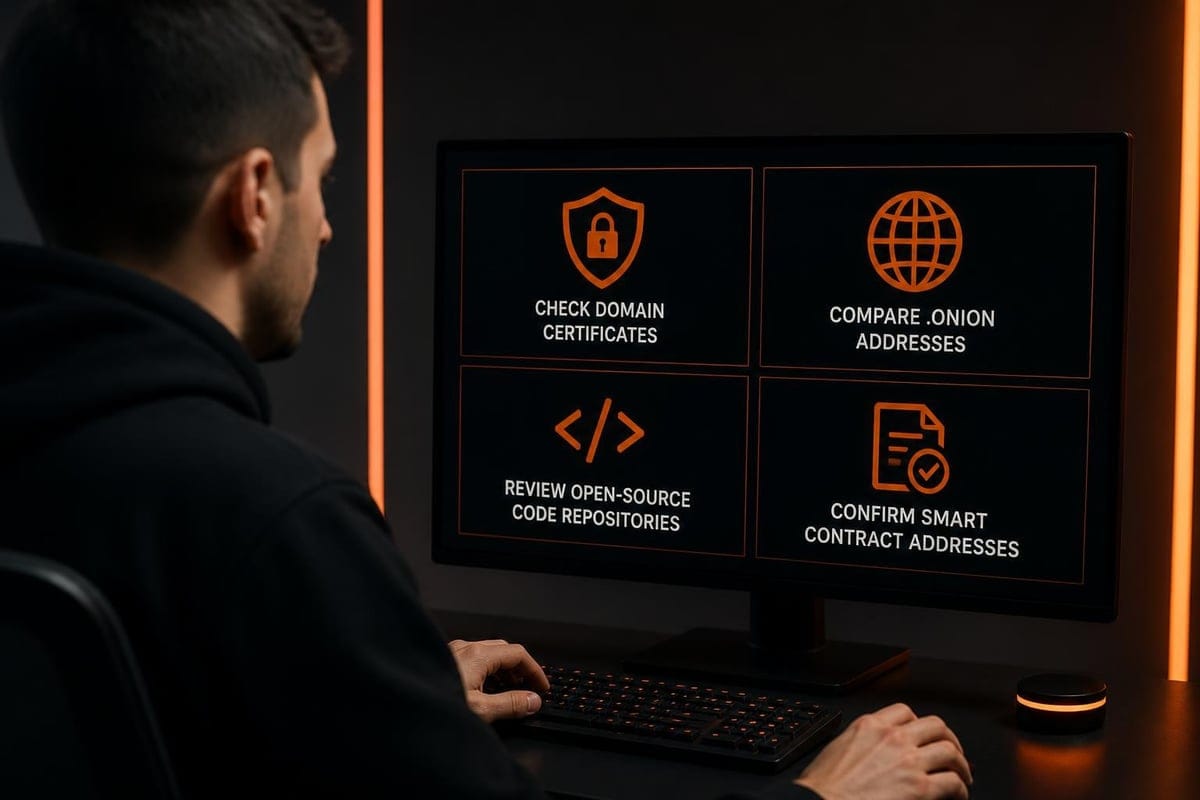
Verification matters. Check that you're connecting to the legitimate domain or .onion address. MoneroSwap provides verification tools to confirm you're using the authentic service. Bookmark the correct URL before you need it. Never follow links from email or social media.
Choosing Between Swap Services
The market for privacy-preserving swaps fragmented as regulatory pressure increased between 2024 and 2026. Some established services shut down. Others implemented KYC under pressure. New entrants emerged with varying levels of technical competence and operational security.
Evaluation criteria for 2026:
- Non-custodial architecture - Verify through code inspection or audit reports that the service never holds your private keys
- No data retention - Confirm the service doesn't log IP addresses, transaction details, or wallet addresses beyond swap completion
- Open-source code - Published code allows independent verification and security research
- Tor accessibility - .onion hidden service prevents network-level surveillance
- Established track record - Service history and community reputation matter when trusting implementation quality
Services specializing in specific coins often provide better rates and reliability than generalist platforms. A platform focused on Monero swaps typically offers more competitive pricing for XMR pairs than a service supporting 200 tokens. Specialization allows deeper liquidity pools and optimized routing for particular trading pairs.
Rate Comparison Methodology
Transparent pricing separates legitimate services from scams. The exchange rate should show clear components: the market mid-price, the service fee, and any network transaction costs. Hidden fees indicate problematic business practices.
Compare rates across multiple services before executing large swaps. Markets move quickly. A rate quote older than 60 seconds may no longer reflect current liquidity. Most no kyc crypto swap services lock rates for 10-30 minutes during swap execution.
Common Trading Pairs and Liquidity
Monero dominates privacy-focused swap volume because of its protocol-level confidentiality features. Bitcoin remains the highest liquidity pair because of its market depth and widespread adoption. BTC to XMR swaps represent the largest category by transaction count in the privacy swap market.
The reverse direction sees similar volume. Users acquiring Bitcoin for spending or converting to fiat execute XMR to BTC swaps regularly. These two pairs account for an estimated 60-70% of all no-kyc swap volume as of 2026.
Popular pair categories:
- Privacy to mainstream: XMR to BTC, XMR to ETH, XMR to stablecoins
- Mainstream to privacy: BTC to XMR, ETH to XMR, stablecoins to XMR
- Stablecoin conversions: USDT to XMR, USDC to XMR
- DeFi tokens: SOL to XMR, LINK to XMR
Ethereum stablecoins provide fiat exposure without centralized exchanges. Swapping XMR to USDT lets you lock value during market volatility without exiting to a bank account. The reverse trade brings fiat-denominated value into private assets.
Multi-Chain Stablecoin Support
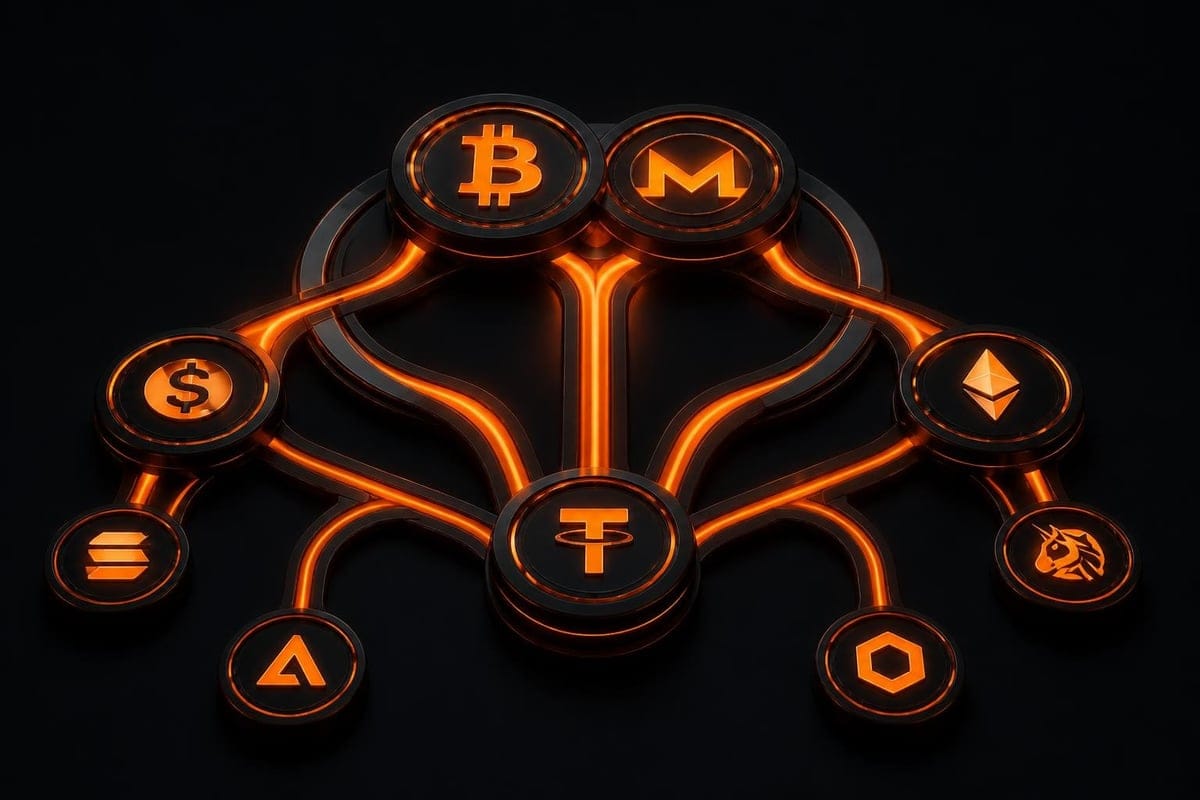
Stablecoins exist across multiple blockchains with different fee structures and settlement speeds. USDT and USDC run on Ethereum, BNB Smart Chain, Base, Arbitrum, and other networks. The chain selection affects transaction costs significantly.
Ethereum mainnet fees spike during network congestion. BNB Smart Chain alternatives offer lower costs but different decentralization tradeoffs. Base network options provide Layer 2 scaling benefits. Arbitrum routes give another Layer 2 alternative with distinct ecosystem characteristics.
Understanding which chain your current holdings use matters. You can't directly swap USDT-BEP20 through an Ethereum-only service. Multi-chain swap platforms handle the complexity, routing your specific token through appropriate bridges and liquidity pools.
Technical Implementation Steps
Executing a no kyc crypto swap requires wallet preparation and basic blockchain literacy. The process assumes you already control the private keys for both the source and destination assets.
Prerequisites:
- Wallet software supporting your source cryptocurrency
- Destination wallet address for the received cryptocurrency
- Small amount of native blockchain token for transaction fees
- Tor Browser if using .onion services for maximum privacy
The swap itself follows a standard flow regardless of which service you use. You specify the trading pair, enter the destination address, send the source funds, and receive the swapped assets. The timeframes vary by blockchain confirmation requirements.
Step-by-Step Execution
- Navigate to the swap interface using either clearnet or Tor
- Select your trading pair from available options
- Enter the destination address where you want to receive funds
- Review the quoted rate including all fees and network costs
- Generate the deposit address where you'll send your source funds
- Send the exact amount from your wallet to the provided address
- Monitor swap progress as the service detects your transaction and initiates the exchange
- Confirm receipt when swapped funds arrive at your destination address
Time requirements depend on blockchain confirmation times. Bitcoin typically needs 2-6 confirmations before the swap initiates. Monero requires 10 confirmations because of its unique consensus mechanism. Ethereum and EVM-compatible chains confirm faster but may wait for additional blocks during high-value swaps.
Recovery mechanisms handle edge cases where swaps fail due to network issues or incorrect addressing. Non-custodial architecture means you can always reclaim your funds even if the service goes offline. The timelock expires and funds return to your original address.
Regulatory Environment in 2026
Government approaches to privacy-preserving cryptocurrency swaps diverged significantly between 2023 and 2026. Some jurisdictions banned all cryptocurrency services that don't collect identity information. Others carved out exceptions for truly decentralized protocols while requiring KYC for custodial platforms.
The regulatory distinction between custodial and non-custodial services became legally formalized in major markets. A service that never holds user funds faces different compliance requirements than an exchange maintaining omnibus wallets. This created space for no kyc crypto swap platforms to operate legally in many jurisdictions while centralized exchanges faced stricter rules.
Enforcement focuses on entities controlling funds rather than protocols enabling peer-to-peer transfers. Smart contracts executing swaps don't constitute regulated money transmission in most frameworks. Services providing interfaces to these contracts occupy a legal grey area that varies by jurisdiction.
Compliance Without Surveillance
Some no kyc crypto swap services implement partial compliance measures without full identity verification. They might limit transaction sizes, restrict certain jurisdictions, or implement blockchain analysis to flag suspicious patterns. These measures attempt to satisfy regulatory concerns while preserving user privacy.
The balance remains contentious. Privacy advocates argue that financial surveillance violates fundamental rights. Regulators counter that anonymous transfers enable crime and tax evasion. The research on adversarial activities in digital asset systems documents both legitimate privacy use cases and criminal exploitation patterns.
Users must make their own determination. Using privacy-preserving swaps is legal in most jurisdictions for most purposes. The technology itself is neutral. Your specific use case and local laws determine legality.
Advanced Privacy Techniques
Running your own blockchain nodes enhances privacy beyond the swap service itself. When your wallet queries a third-party server for your balance or transaction history, that server learns your addresses and timing patterns. Operating a full node eliminates this metadata leakage.
Monero full nodes download the entire blockchain and validate all transactions locally. Your wallet queries only your own node. Nobody else learns which outputs belong to you. Bitcoin full nodes provide similar benefits with additional privacy tools like Tor-only connections and compact block filters.
Layer-by-layer privacy stack:
- Network layer: Tor or I2P for IP address anonymity
- Transaction layer: Privacy coins with confidential amounts and addresses
- Service layer: No kyc crypto swap with no logging
- Wallet layer: Full node prevents address disclosure to third parties
- Operational layer: Dedicated hardware, encrypted storage, separate identities
The comprehensive approach matters more than any single element. An IP leak undermines transaction privacy. Reusing addresses defeats confidential amounts. Each layer complements the others.
Coin Selection and Change Management
Advanced users implement coin control to prevent transaction graph analysis. Each time you receive cryptocurrency, you create a new unspent transaction output (UTXO). When you spend, you select which UTXOs to use as inputs. Naive wallet software combines unrelated UTXOs, linking them in blockchain analysis.
Manual coin selection lets you spend only outputs acquired through similar sources. You avoid mixing coins bought through KYC with coins acquired privately. This prevents correlation between different aspects of your financial activity.
Monero handles this automatically through ring signatures and stealth addresses. Every transaction mixes your actual spend with decoys from other users. The blockchain shows possible spenders but not the real one. Change outputs use new stealth addresses unlinked to your main address. This built-in privacy explains Monero's dominance in no-kyc swap markets.
Swap Service Features and Transparency
Open-source code publication separates trustworthy services from potential scams. When swap logic runs in closed-source backend systems, users can't verify the implementation. Claims about non-custodial architecture or zero logging remain unverifiable assertions.
Published code enables independent security research. Vulnerabilities get discovered and fixed. Competitors can verify that marketing claims match technical reality. Users with development skills can run modified versions or fork the entire service.
MoneroSwap publishes its source code following this transparency principle. The swap logic, smart contracts, and privacy mechanisms are all inspectable. Third-party auditors can verify that no user data persists beyond swap completion and that funds never enter custodial wallets.
Transparency Report Elements
Services committed to privacy should regularly publish transparency reports documenting their operations:
| Report Element | Purpose | Frequency |
|---|---|---|
| Swap volume by pair | Demonstrate liquidity depth | Monthly |
| Uptime statistics | Show reliability | Monthly |
| Failed swap rate | Indicate technical quality | Monthly |
| Average completion time | Set user expectations | Monthly |
| Security audit results | Prove code quality | Per audit |
| Infrastructure changes | Disclose operational shifts | As needed |
The absence of user identification data means these reports can't include the surveillance metrics that centralized exchanges publish. No jurisdiction breakdowns. No user count. No demographic information. The service literally doesn't collect this data.
Future Protocol Development
Research continues on more efficient and private swap mechanisms. Recent cryptographic advances explore probabilistic protocols that reduce on-chain footprint while maintaining security guarantees. These approaches matter because blockchain fees and privacy leakage both correlate with transaction complexity.
Adaptor signatures enable atomic swaps with smaller on-chain transactions and better privacy characteristics. The technique works across different signature schemes, supporting more cryptocurrency pairs than previous protocols. Implementation requires careful cryptographic engineering but offers significant improvements over HTLC-based swaps.
Cross-chain bridges and wrapped tokens provide alternative approaches to the swap problem. Rather than exchanging native assets, users lock Bitcoin and receive a Ethereum-based representation. These mechanisms introduce different trust assumptions and centralization risks that may or may not align with privacy requirements.
Privacy-preserving cryptocurrency swaps provide essential financial freedom in an increasingly surveilled digital economy. The technology works reliably in 2026, with mature protocols and established services handling billions in monthly volume. Whether you're protecting legitimate financial privacy, operating in a hostile regulatory environment, or simply rejecting surveillance capitalism, no kyc crypto swap services deliver functional alternatives to identity-linked exchanges. MoneroSwap offers a proven platform for non-custodial swaps focused on Monero, with open-source code, Tor compatibility, and zero logging to ensure your financial activity remains private.
Swap into or out of Monero, no KYC
MoneroSwap is a non-custodial way to swap Monero with no account, no KYC, and no logs. Open source and available over Tor. Verify every claim, then swap BTC to Monero, ETH to Monero, USDT to Monero, or see all pairs. New here? Start with the FAQ.
← All guides