
No KYC Crypto Swaps: Privacy, Risks, and How They Work
No KYC cryptocurrency services let you swap digital assets without submitting identity documents or personal information. These platforms skip the selfie uploads, passport scans, and proof-of-address requirements that centralized exchanges enforce under anti-money laundering regulations. The no KYC model appeals to users who prioritize financial privacy, want faster onboarding, or operate in jurisdictions where traditional exchanges refuse service.
How No KYC Swaps Actually Work
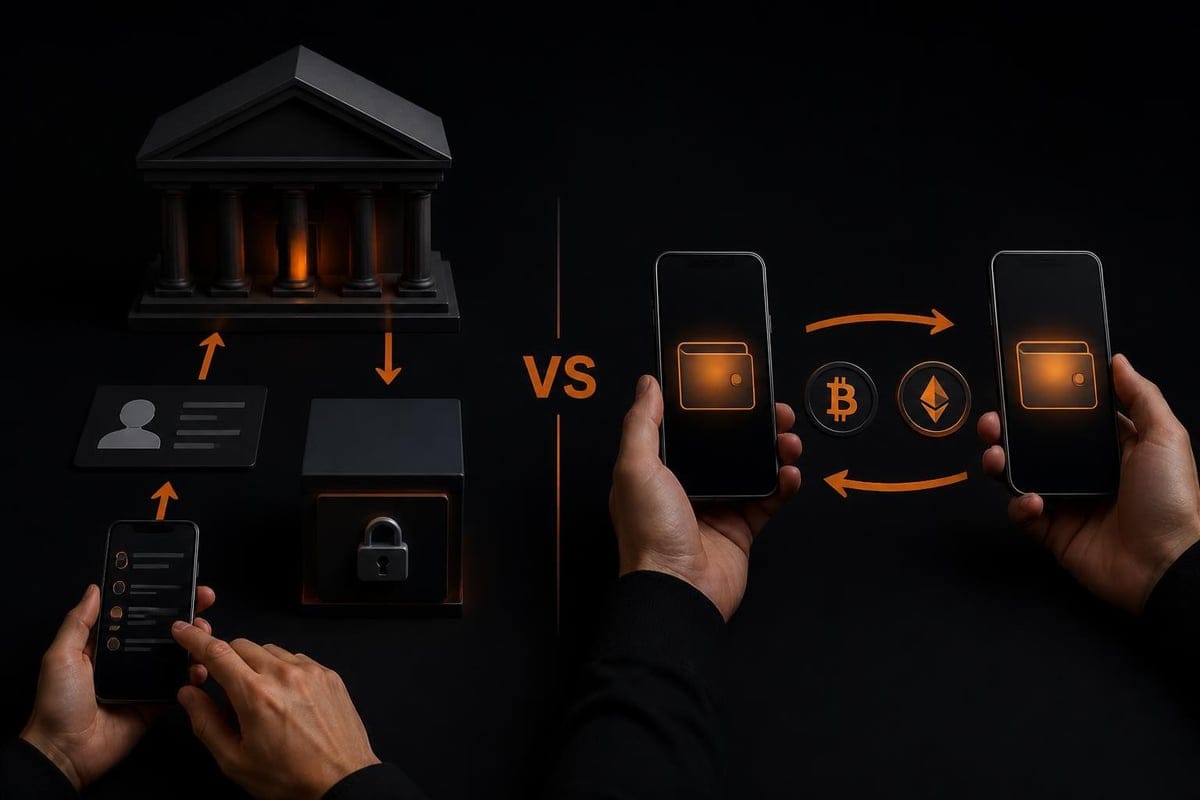
Non-custodial swap services execute trades without ever holding your funds or collecting personal data. You send cryptocurrency to a time-locked address, the protocol routes it through a decentralized exchange or liquidity pool, and the output currency arrives at your destination wallet. The entire transaction happens on-chain or through atomic swaps, with no intermediary storing private keys or login credentials.
Traditional exchanges require KYC because they custody your assets and act as regulated financial institutions. When you deposit Bitcoin on a centralized platform, you're trusting that company to hold it while you trade. That custody relationship triggers FinCEN guidance on virtual currency services, which classifies custodial platforms as money transmitters subject to Bank Secrecy Act requirements.
The Technical Architecture
No KYC platforms use several methods to facilitate anonymous swaps:
- Atomic swaps execute peer-to-peer trades through hash time-locked contracts, ensuring both parties receive their assets or the transaction cancels
- DEX aggregators route orders through multiple liquidity pools to optimize pricing without requiring user accounts
- Non-custodial bridges move assets across blockchains using lock-and-mint mechanisms that don't involve centralized validators
- Tor compatibility masks IP addresses and geographic location data during the swap process
The swap interface at MoneroSwap demonstrates this architecture. You select input and output currencies, paste a destination address, and send funds to a generated deposit address. The service doesn't create user accounts, store transaction logs beyond the minimum needed for execution, or link multiple swaps to the same user.
Privacy Coins and No KYC Demand
Monero dominates no KYC swap volume because its protocol-level privacy features align with the user base seeking anonymous transactions. XMR obscures sender addresses, recipient addresses, and transaction amounts through ring signatures, stealth addresses, and confidential transactions. You can't trace Monero flows on a public blockchain the way you can follow Bitcoin or Ethereum transfers.
This privacy creates circular demand. Users want no KYC services to acquire Monero, and they want Monero because it maintains privacy after the swap completes. A BTC to XMR swap converts transparent Bitcoin into private Monero, breaking the chain analysis link between your previous Bitcoin activity and future spending. The reverse XMR to BTC conversion lets you move back into the broader crypto ecosystem when needed.
Recent research shows privacy coin adoption correlates with regulatory pressure on centralized exchanges. When platforms delist XMR due to compliance concerns, trading volume migrates to non-custodial alternatives. Academic analysis of privacy coins and dark web activity documents this pattern, though the majority of privacy coin usage serves legitimate purposes like salary payments, merchant transactions, and wealth preservation.
Regulatory Landscape in 2026
The legal environment for no KYC services tightened significantly between 2022 and 2026. The European Union's Markets in Crypto-Assets (MiCA) regulation and updated Anti-Money Laundering Directive expanded KYC obligations to previously unregulated service providers. The EBA's travel rule guidance now requires crypto businesses to share sender and recipient information for transfers above €1,000, mirroring traditional wire transfer rules.
| Jurisdiction | No KYC Status | Threshold | Enforcement |
|---|---|---|---|
| United States | Illegal for MSBs | $0 | Active prosecution |
| European Union | Prohibited above €1,000 | €1,000 | Moderate enforcement |
| Switzerland | Allowed under SFr 1,000 | ~$1,100 | Self-regulated |
| Singapore | Licensed exchanges only | $0 | Strict enforcement |
These regulations target custodial services and businesses with identifiable operators. Fully decentralized protocols face enforcement challenges because no legal entity controls the smart contracts or can comply with information requests. Regulators respond by pressuring infrastructure providers like hosting companies, domain registrars, and fiat on-ramps to cut off access to non-compliant platforms.
How Services Operate Legally
No KYC platforms survive through several strategies:
- Jurisdictional arbitrage: Operating from regions with minimal crypto regulation or weak enforcement
- Decentralized architecture: Using smart contracts with no admin keys that can't be shut down or modified
- Open source code: Publishing all software publicly so users can verify behavior and run independent instances
- Tor integration: Offering onion services accessible only through privacy-preserving networks
- No fiat touchpoints: Avoiding bank relationships by operating purely in cryptocurrency
MoneroSwap's open source codebase exemplifies this approach. Anyone can audit the swap logic, verify that no logs are retained, and confirm that user funds move directly between wallets without custodial risk. The service doesn't interface with traditional banking systems or process credit card payments, eliminating most regulatory hooks.

Risk Profile and User Considerations
No KYC swaps introduce specific risks that don't exist on regulated exchanges. You're trading regulatory protection and dispute resolution for privacy and permissionless access.
Counterparty risk affects peer-to-peer platforms where you're matched with another trader. If they don't deliver the promised cryptocurrency, you have limited recourse. Escrow mechanisms and reputation systems mitigate this, but they're imperfect. Non-custodial protocols using atomic swaps eliminate counterparty risk by ensuring both legs of the trade execute simultaneously or neither executes at all.
Smart contract risk matters when swaps route through DeFi protocols. A bug in the code could lock funds permanently or allow exploits. The ArXiv review of DEX security catalogs common vulnerabilities in automated market makers and cross-chain bridges. Audited contracts reduce but don't eliminate this risk.
Liquidity and pricing tend to be worse than major exchanges. No KYC services access smaller liquidity pools and can't internalize order flow the way custodial platforms do. You'll typically pay 1-3% more in fees and slippage compared to a Coinbase or Binance trade. This premium represents the cost of privacy.
Common Failure Modes
Users lose funds through predictable mistakes:
- Sending the wrong asset to a deposit address expecting a different currency
- Using a smart contract address instead of a regular wallet as the destination
- Not waiting for sufficient blockchain confirmations before assuming the swap completed
- Falling for phishing sites that clone legitimate no KYC platforms
MoneroSwap's FAQ section addresses these issues with specific guidance on transaction confirmations, supported currencies, and address format requirements. The recovery process can help if you sent funds but the swap didn't complete, though options are limited compared to contacting customer support at a centralized exchange.
Chain Analysis and De-Anonymization Risks
No KYC doesn't guarantee anonymity. Blockchain forensics firms like Chainalysis track fund flows across transparent ledgers, clustering addresses and identifying patterns. Their 2024 analysis of crypto money laundering shows that even sophisticated users leave traces when moving between privacy tools and mainstream exchanges.
The typical de-anonymization path works like this. You swap BTC for XMR on a no KYC platform. The Bitcoin transaction to the swap service is public and links your sending address to the swap. When you eventually convert XMR back to Bitcoin or another transparent asset, that transaction creates another public link. Chain analysis connects these endpoints through timing correlation, amount fingerprinting, and exchange clustering.
Timing correlation matches deposits and withdrawals based on timestamps. If 1.5 BTC enters a swap service and 1.48 BTC (accounting for fees) leaves ten minutes later, those transactions probably belong to the same user even though different addresses are involved.
Amount fingerprinting identifies unique transaction values. Swapping exactly 0.87654321 BTC creates a distinctive pattern that's easy to track across multiple hops.
Exchange clustering groups addresses known to belong to the same platform. When investigators identify one address used by a swap service, they can monitor all related addresses and build a transaction graph.
Effective Privacy Practices
Breaking chain analysis requires layered approaches:
- Split transactions into multiple swaps of varying amounts across different time periods
- Use privacy coins like Monero for intermediate steps, converting BTC → XMR → ETH rather than direct BTC → ETH swaps
- Route through multiple protocols instead of using the same no KYC service repeatedly
- Avoid round numbers by swapping irregular amounts that don't stand out in datasets
- Maintain air gaps between wallets used for KYC exchanges and those used for no KYC swaps
Converting stablecoins to Monero provides a practical middle ground. A USDT to XMR swap lets you exit the transparent Ethereum ecosystem into private value storage. The reverse swap to USDC gives you access to DeFi protocols and mainstream exchanges when needed.

Comparing Platform Types
No KYC services fall into distinct categories with different trust models and functionality.
| Platform Type | Custody | Privacy Level | Speed | Cost |
|---|---|---|---|---|
| Centralized no-KYC | Temporary | Low | Fast | Low fees |
| DEX aggregators | None | Medium | Medium | Medium fees |
| Atomic swap protocols | None | High | Slow | Low fees |
| Privacy-focused services | None | Very high | Medium | Higher fees |
Centralized no-KYC platforms like some smaller exchanges operate in lax jurisdictions and simply don't enforce identity verification. They custody funds during trades and maintain internal databases. These services offer the worst privacy despite skipping KYC forms because they can log IP addresses, link transactions, and are vulnerable to data breaches or government seizure.
DEX aggregators route trades through multiple liquidity pools without taking custody. Services like 1inch or Paraswap work this way. You interact directly with smart contracts through your own wallet. Privacy depends on the underlying blockchain. Swapping on Ethereum exposes your entire transaction history on that address.
Atomic swap protocols use cryptographic techniques to enable direct peer-to-peer trades. They're slow because both parties must be online and coordinate the multi-step process. They offer high privacy when implemented correctly but suffer from poor user experience and limited currency support.
Privacy-focused services like MoneroSwap specialize in routes involving Monero and other privacy coins. They're non-custodial but maintain temporary transaction state during the swap process. The swap verification tool lets you check transaction status without creating an account, maintaining the no-registration model.
Use Cases Beyond Speculation
No KYC swaps serve practical purposes beyond avoiding government oversight or evading taxes.
Cross-border payments work better with cryptocurrency than traditional banking in many corridors. A construction worker in Dubai sending money home to the Philippines faces 8-12% fees through remittance services plus exchange rate markups. Swapping earnings to XMR and sending them to family who convert back to local currency costs 2-3% total. No KYC access matters because many recipients lack the documents required for exchange accounts.
Merchant processing without chargebacks appeals to businesses in high-risk categories. A VPN provider accepting Monero payments avoids the 3-5% credit card processing fees and eliminates dispute abuse. Customers value the privacy of not linking their identity to VPN usage. The merchant uses ETH to XMR swaps to accept multiple currencies without managing separate wallets.
Jurisdictional restrictions block legitimate users from centralized exchanges. Someone living in Afghanistan, Syria, or other sanctioned regions can't pass KYC verification even with valid documents because exchanges refuse service based on IP address or stated residence. No KYC access provides their only on-ramp to cryptocurrency markets.
Financial privacy as a civil liberty motivates users who reject surveillance on principle rather than hiding illegal activity. The same arguments for protecting cash transactions, encrypted messaging, and anonymous speech apply to private value transfer. A political dissident, journalist, or activist has valid reasons to keep financial activity confidential.
Technical Implementation Details
Understanding how no KYC swaps execute helps evaluate platform trustworthiness and identify red flags.
Atomic Swap Mechanics
Hash time-locked contracts (HTLCs) enable trustless cross-chain swaps. Here's the simplified sequence:
- Alice wants to swap Bitcoin for Bob's Monero
- Alice generates a random secret and hashes it
- Alice creates a Bitcoin HTLC that pays Bob if he reveals the secret within 24 hours
- Bob verifies Alice's HTLC and creates a Monero HTLC using the same hash
- Alice claims the Monero by revealing the secret
- Bob uses the now-public secret to claim the Bitcoin
- If either party fails to act, time locks return funds to the original owner
This process requires no trusted intermediary. The cryptography ensures both trades execute or neither does. Submarine swaps extend this concept to Lightning Network channels, enabling instant BTC-XMR conversions with minimal on-chain footprint.
Liquidity Sourcing
Non-custodial platforms obtain liquidity through several mechanisms:
- Internal reserves: The operator maintains cryptocurrency reserves and acts as the counterparty for each swap, profiting from the spread
- DEX aggregation: Smart contracts query multiple decentralized exchanges and route the trade through the best available rate
- Liquidity providers: Users stake cryptocurrency in pools and earn fees from swap volume, similar to Uniswap's model
- Peer-to-peer matching: The platform connects buyers and sellers directly without facilitating the actual asset transfer
MoneroSwap combines internal reserves for common pairs with aggregation for less frequent routes. This hybrid approach provides consistent pricing for SOL to XMR swaps while supporting a wide range of base network assets through DeFi integration.
Network Effects and Market Fragmentation
No KYC services suffer from liquidity fragmentation. Each platform maintains separate reserves and user bases. A comparison of centralized and decentralized exchanges found that DEXs consistently offer worse pricing than centralized competitors due to this fragmentation, with spreads 0.5-2% wider on average.
The situation improved slightly as DEX aggregators emerged. Now a single swap request can tap liquidity across Uniswap, SushiSwap, Curve, and other protocols simultaneously. But no equivalent aggregation exists across different no KYC platforms. You can't easily compare rates between ten different services before executing a trade.
This creates sticky user behavior. Once you've used a particular no KYC platform successfully, switching costs are low but friction exists. You'd need to research alternatives, verify their trustworthiness, and potentially deal with different interfaces. Most users stick with a known service even if they're paying a small premium.
Market Concentration Risks
The no KYC market tends toward oligopoly despite low barriers to entry. Trust takes years to build, while one exit scam or hack destroys a platform's reputation permanently. New services struggle to attract users away from established competitors.
Research on decentralized exchange behavior documents how liquidity concentrates on top platforms despite minimal technical differences. Users flock to services with the deepest order books because they offer better execution. This creates a self-reinforcing cycle where leading platforms grow liquidity while competitors stagnate.
Privacy-focused users particularly value operational track records. A service like MoneroSwap builds trust by processing thousands of swaps without incidents, maintaining open source code, and demonstrating consistent uptime. A competitor offering identical technical features starts with zero trust and must prove reliability over months or years.
Future Trajectory and Emerging Patterns
Three trends will shape no KYC services through 2027 and beyond.
Regulatory fragmentation accelerates as jurisdictions take different approaches. Some countries will effectively ban no KYC platforms through enforcement against infrastructure providers. Others will maintain lax oversight either deliberately or through lack of technical capability. Platforms will increasingly operate from privacy-friendly jurisdictions while serving global users through Tor and decentralized infrastructure.
Privacy technology improvements make chain analysis harder. Monero continues adding protocol enhancements like Triptych and Seraphis to strengthen anonymity guarantees. Bitcoin gets better privacy through Taproot adoption and Lightning Network growth. Zero-knowledge proof systems like Zcash's Halo Arc improve performance and enable new privacy-preserving applications.
DeFi integration expands no KYC access to complex financial products. You can already swap into yield-bearing tokens, provide liquidity to automated market makers, and participate in derivatives markets without identity verification. This convergence of privacy tools and decentralized finance creates alternatives to traditional banking that operate entirely outside the regulated financial system.
The tension between financial privacy and regulatory control will intensify rather than resolve. Technology enabling no KYC services improves faster than enforcement mechanisms. But governments gain tools too, from improved chain analysis to pressure on fiat on-ramps. Users caught between these forces need to understand both the capabilities and limitations of privacy-preserving swap services.
No KYC cryptocurrency swaps provide permissionless access to digital asset markets without identity verification, serving users who prioritize financial privacy or face barriers to regulated exchange accounts. The trade-offs involve higher costs, increased risks, and potential legal exposure in some jurisdictions, balanced against anonymity and censorship resistance that KYC platforms cannot offer. MoneroSwap addresses these needs through non-custodial swaps, open source code, and Tor compatibility that preserves user privacy throughout the transaction process without requiring registration or collecting personal information.
Swap into or out of Monero, no KYC
MoneroSwap is a private Monero swap with no account, no KYC, and no logs. Open source and available over Tor. Verify every claim, then swap BTC to Monero, ETH to Monero, USDT to Monero, or see all pairs. New here? Start with the FAQ.
← All guides