Custodial Wallet: How They Work and What You Risk
A custodial wallet is a cryptocurrency wallet where a third party holds your private keys on your behalf. You access your funds through the provider's interface, but you don't control the cryptographic keys that authorize transactions. The custodian manages key storage, security infrastructure, and transaction signing while you log in with a username and password like a traditional web service.
This arrangement mirrors how traditional banks work. You deposit money, the bank manages the vault, and you access your balance through their systems. The fundamental difference in crypto is that whoever controls the private keys controls the funds directly. No court order or legal process can reverse a blockchain transaction if the keys are compromised or the custodian refuses access.
How Custodial Wallets Actually Work
The custodian generates and stores private keys in their infrastructure. When you create an account, they provision a wallet address and associate it with your login credentials. The blockchain sees the custodian's wallet infrastructure making transactions, not your individual credentials.
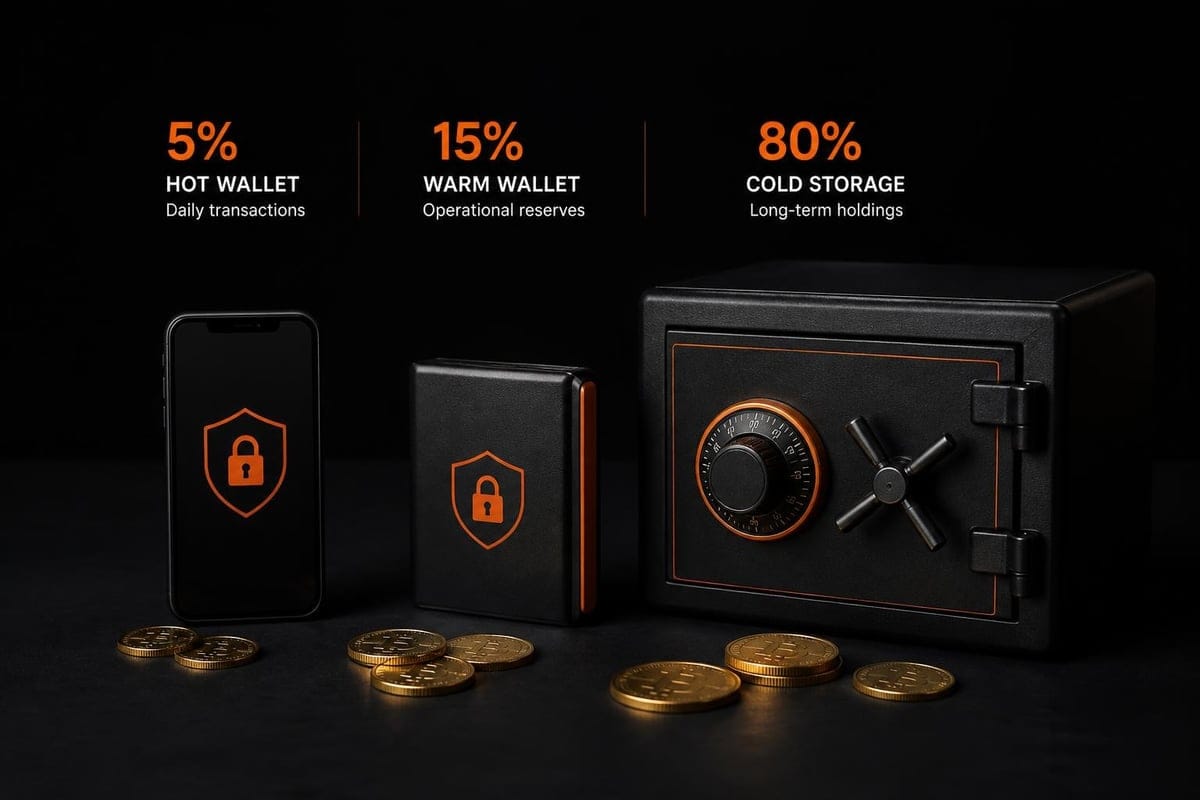
Most custodians use a combination of hot wallets and cold storage. Hot wallets stay connected to the internet for quick withdrawals and trading. They hold a smaller percentage of total assets. Cold storage systems keep the majority of funds offline in hardware security modules or air-gapped computers.
Key Management Infrastructure
Enterprise custodians implement sophisticated controls around private key access. They split keys across multiple geographic locations, require multiple signatures for large transactions, and maintain strict audit logs. Institutional custody providers use multi-signature schemes where multiple parties must approve each transaction.
Common security measures include:
- Hardware security modules (HSMs) for key generation and storage
- Multi-signature requirements for withdrawal approval
- Whitelisted withdrawal addresses that require advance setup
- Time-delayed withdrawals that allow reversal during a review window
- Insurance policies covering losses from security breaches
- Regular third-party security audits
The actual key material never leaves the secure environment. When you request a withdrawal, the custodian's systems authenticate your request, validate it against their rules engine, then sign the transaction within the protected infrastructure.
Types of Custodial Services
Different providers structure custody relationships differently. The security model, insurance coverage, and control mechanisms vary significantly across categories.
| Provider Type | Examples | Key Storage | Insurance | Recovery Options |
|---|---|---|---|---|
| Exchanges | Coinbase, Kraken, Binance | Mixed hot/cold | Partial | Email/2FA reset |
| Specialized Custodians | BitGo, Anchorage, Fireblocks | Primarily cold | Comprehensive | Legal documentation |
| Wallet Apps | Blockchain.com, Exodus (cloud backup) | User choice | Limited | Seed phrase backup |
| Payment Apps | Cash App, PayPal, Venmo | Fully custodial | Corporate balance sheet | Account recovery |
Exchange Custody
Exchanges operate the most common form of custodial wallet. When you deposit cryptocurrency to an exchange, you're transferring it to their wallet infrastructure. The exchange credits your account balance in their internal database, but the actual coins sit in pooled wallets they control.
You can't verify your specific coins exist on-chain. The exchange maintains fractional reserves and moves funds between hot and cold storage as needed. Most exchanges now publish proof-of-reserves reports, but these show aggregate holdings, not individual user balances.
Exchanges optimize for trading speed over security granularity. They batch transactions, use internal transfers for trades between users, and only settle to the blockchain for deposits and withdrawals. This makes trading fast but concentrates risk.
Institutional Custody Solutions
Banks, hedge funds, and investment firms require higher security standards and regulatory compliance. Governance frameworks for institutional custody establish operational controls, segregation requirements, and insurance minimums.
These custodians offer:
- Qualified custody meeting SEC requirements for investment advisers
- Segregated accounts where your keys aren't pooled with other clients
- Insurance coverage often exceeding $100 million per client
- Legal clarity with defined liability and recovery procedures
- Audit trails satisfying institutional compliance requirements
The trade-off is higher fees, minimum balance requirements, and slower transaction processing due to approval workflows.
Privacy Implications of Custodial Wallets
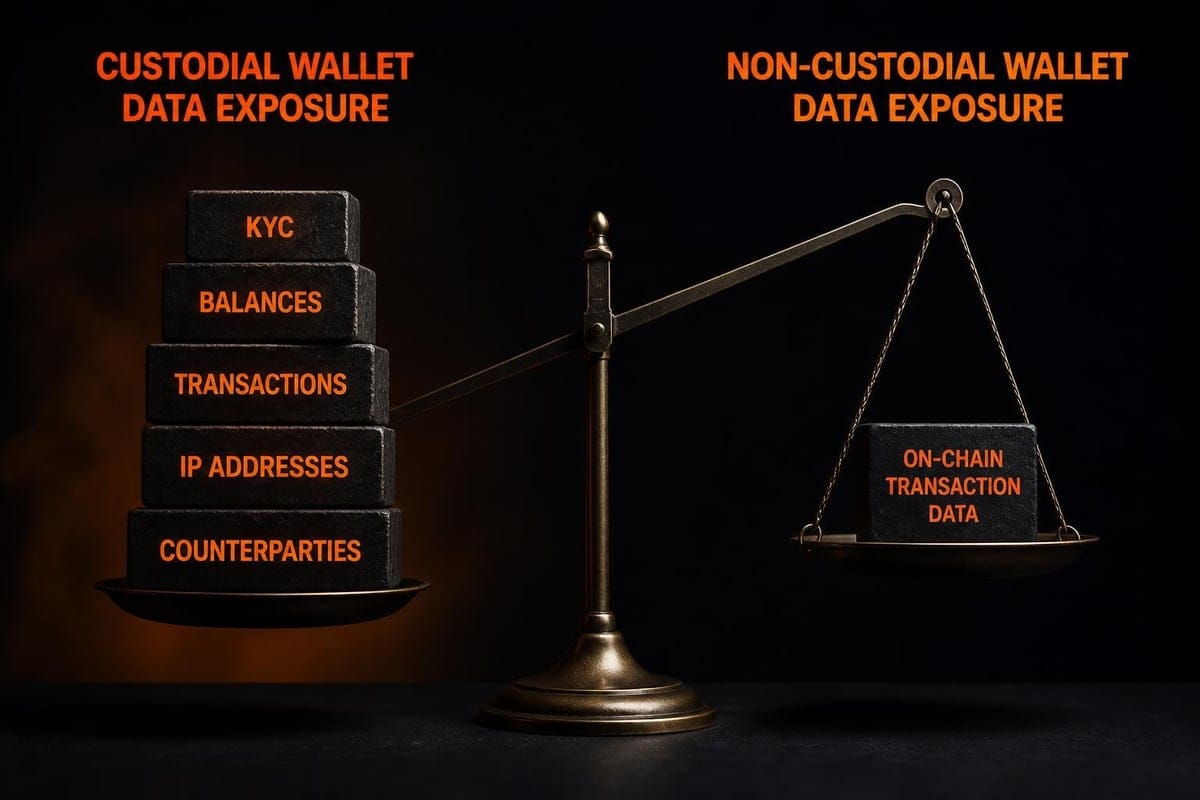
Custodians know everything about your activity. They see your balance, transaction history, counterparties, and trading patterns. Most collect identity documents, proof of address, and source of funds documentation during account creation.
This creates several privacy risks:
- Data breaches exposing your crypto holdings and identity
- Subpoenas forcing disclosure of your transaction history
- Analytics linking your crypto activity to real-world identity
- Third-party sharing with law enforcement, tax authorities, or data brokers
- Frozen accounts blocking access based on transaction analysis
Exchanges routinely share data with blockchain analytics firms. These companies trace fund flows across addresses and flag accounts interacting with mixers, gambling sites, darknet markets, or sanctioned entities. The custodian can freeze your account or demand additional documentation based on this analysis.
Regulatory Surveillance
Financial regulators treat large custodians as money transmitters or financial institutions. This brings reporting requirements similar to banks. Custodial wallet providers file suspicious activity reports, comply with travel rule requirements, and implement transaction monitoring systems.
When you withdraw cryptocurrency from an exchange to a privacy-focused swap service, the exchange logs the destination address and withdrawal amount. Some exchanges block withdrawals to addresses they've flagged as high-risk or demand explanations for the transfer.
Custodial vs Non-Custodial Control
The distinction matters more than most users realize. With a custodial wallet, you're asking permission to move your own funds. The custodian can refuse withdrawals, require additional verification, or freeze your account without immediate recourse.
Control differences:
| Aspect | Custodial | Non-Custodial |
|---|---|---|
| Private keys | Custodian holds | You hold |
| Transaction approval | Custodian must sign | You sign directly |
| Censorship resistance | Low | High |
| Recovery if keys lost | Account reset available | Impossible without backup |
| Regulatory compliance | KYC/AML required | Optional |
| Counterparty risk | Trust custodian | Trust code |
Non-custodial alternatives put you in direct control. You hold the seed phrase or private keys. You sign transactions from your own device. No company can freeze your wallet or demand documentation before allowing a transfer.
This comes with responsibility. Lose your keys and your funds are gone permanently. No customer support can help. But you gain true ownership and censorship resistance.

Common Custodial Wallet Risks
Several high-profile custodial failures demonstrate the risks. Mt. Gox, QuadrigaCX, FTX, and others lost or stole billions in customer funds. Users had no recourse because they didn't control the keys.
Insolvency and Fraud
Custodians can use customer funds inappropriately. FTX lent customer deposits to its trading arm without disclosure. When the loans went bad, customer funds disappeared. Bankruptcy proceedings are still ongoing in 2026, with most users recovering only a fraction of their holdings.
The legal status of cryptocurrency in custody remains unclear in many jurisdictions. When a custodian declares bankruptcy, your crypto might be treated as company property subject to creditor claims rather than segregated customer assets.
Technical Failures
Hot wallet exploits regularly drain custodial exchanges. Attackers target the wallet infrastructure through phishing, malware, insider threats, or smart contract vulnerabilities. Even cold storage isn't immune. Physical security failures, key generation flaws, or implementation bugs can compromise supposedly secure systems.
Recent custodial security incidents (2024-2026):
- Multi-signature wallet compromise: $120M stolen
- Exchange hot wallet drain: $85M via phishing attack
- Custodian employee theft: $45M from cold storage
- Smart contract exploit: $200M drained across multiple custodial DeFi services
Insurance rarely covers the full loss. Policies contain exclusions, sub-limits, and lengthy claims processes. Users might receive partial compensation years after the incident.
Regulatory Seizure
Governments can force custodians to freeze accounts or seize funds. In 2026, several exchanges blocked accounts based on expanded sanctions lists and transaction graph analysis. Users whose funds interacted with flagged addresses found accounts frozen pending investigation.
Custodians comply with court orders, law enforcement requests, and regulatory directives. They must choose between user interests and legal compliance. They choose compliance.
When Custodial Wallets Make Sense
Despite the risks, custodial solutions fit specific use cases. They're not categorically wrong, just different trade-offs.
Valid custodial use cases:
- Short-term exchange trading where speed matters more than sovereignty
- Users unable to secure their own keys safely
- Estate planning where heirs need recovery mechanisms
- Corporate treasury management requiring approval workflows
- Payment processing needing instant settlement
Traders actively managing positions accept custodial risk for execution speed. Moving funds on-chain for each trade would cost too much in fees and time. The exchange's internal settlement system makes frequent trading practical.
Some users honestly can't manage key security. They lose passwords, fall for phishing attacks, or struggle with technical complexity. A custodian with account recovery options might be safer for them than self-custody they'll compromise.
Hybrid Approaches
Smart users minimize custodial exposure while using these services tactically. They keep only trading balances on exchanges and withdraw long-term holdings to non-custodial wallets. This limits the custodian's window of control.
Risk mitigation strategies:
- Use custodial wallets only for active trading or immediate needs
- Withdraw holdings to self-custody regularly
- Spread funds across multiple custodians to avoid single points of failure
- Verify withdrawal addresses on multiple devices before large transfers
- Enable all available security features (2FA, whitelist, withdrawal delays)
Privacy-Preserving Alternatives
Users prioritizing privacy should minimize custodial wallet usage. The surveillance inherent in these systems conflicts with cryptocurrency's censorship-resistant design.
Non-custodial wallets let you hold keys directly. You control when and how funds move. No company tracks your balance or analyzes your transactions. You can route traffic through Tor, use coin control features, and interact with privacy-focused protocols.
For users exchanging between cryptocurrencies, non-custodial swap services eliminate custodial risk entirely. Swapping BTC to XMR or exchanging ETH to XMR through a non-custodial protocol means the service never controls your funds. You send from your wallet directly to the protocol's smart contract or atomic swap mechanism.
Privacy-focused cryptocurrencies like Monero add another layer. When you swap USDT to XMR using a non-custodial service, you break the surveillance chain. The exchange knows you withdrew USDT to a swap service but can't track what you did with the XMR afterward.
Technical Architecture Details
Understanding how custodians actually manage keys helps evaluate their security claims. Most use a tiered system with different security levels for different fund amounts.
Hot Wallet Operations
Hot wallets remain online for automated withdrawals. They hold enough cryptocurrency to process typical daily volume without manual intervention. Security relies on:
- Network segmentation isolating wallet servers
- Rate limiting on withdrawal amounts and frequencies
- Automated monitoring flagging unusual patterns
- Regular sweeps moving excess funds to cold storage
Custodians tune hot wallet balances based on volume. Higher trading activity requires more funds online. This increases risk but improves user experience.
Cold Storage Protocols
True cold storage never connects to networked systems. The custodian generates keys on air-gapped machines, stores them on hardware devices or paper backups, and secures them in vaults. Moving funds out requires physical access to the storage location.
Standard cold storage procedure:
- Generate transaction on internet-connected system
- Transfer unsigned transaction to air-gapped signing device
- Verify transaction details on isolated screen
- Sign with cold storage key
- Transfer signed transaction back to networked system
- Broadcast to blockchain
This process takes hours or days. Institutional custodians require multiple approvals, background checks on operators, and video recording of the entire process. The security is high but liquidity is low.
Evaluating Custodial Providers
Not all custodians offer equivalent security or trustworthiness. Users should evaluate providers across multiple dimensions before trusting them with significant funds.
Key evaluation criteria:
| Criterion | Questions to Ask | Red Flags |
|---|---|---|
| Reserves | Do they publish proof-of-reserves? Is it audited? | No transparency, history of delays |
| Insurance | What coverage exists? What's excluded? | Vague claims, no policy details |
| Security | What storage methods? Any breaches? | Single signature, web wallets, hacks |
| Regulation | What jurisdictions? Licensed where? | Offshore, unlicensed, moving frequently |
| Withdrawals | Any delays or limits? Can you withdraw anytime? | Withdrawal freezes, unexplained holds |
Research the custodian's history. How long have they operated? Have they survived market downturns? How did they handle past security incidents? Companies that communicated transparently and made users whole demonstrate better operational practices than those that went silent or blamed users.
Check whether they segregate customer assets from company funds. Mixing creates risk that company liabilities become customer losses. Reputable custodians maintain separate accounts and undergo regular attestation audits.
Real-World Usage Patterns
Most cryptocurrency users interact with custodial wallets whether they realize it or not. The majority of trading volume flows through centralized exchanges using custodial infrastructure. Even users who self-custody often move funds through exchanges for on-ramps, off-ramps, or trading pairs unavailable elsewhere.
This creates exposure during the custody period. You might hold Bitcoin in a non-custodial wallet for years but need to send it to an exchange to trade for stablecoins. While your funds sit on the exchange awaiting the trade, you're exposed to custodial risk.
Smart users minimize this window. They deposit, execute the trade, and withdraw immediately. Leaving funds on exchanges "just in case" multiplies risk without benefit. The convenience of instant trading access doesn't justify permanent custodial exposure.
The Future of Custodial Solutions
Regulatory pressure is pushing toward more formalized custody arrangements. In the United States, the SEC requires investment advisers to use qualified custodians for client crypto assets. This legitimizes institutional custody but increases compliance costs and surveillance.
New technologies might reduce custodial risks. Multi-party computation (MPC) lets multiple parties jointly control keys without any single party having full access. Threshold signatures distribute key material across servers in different jurisdictions, requiring quorum approval for transactions.
These approaches blur the line between custodial and non-custodial. The user might not hold keys directly, but no single custodian can unilaterally access funds either. Recovery mechanisms exist without complete control surrender.
However, regulatory requirements still apply. Even distributed custody systems must implement KYC, transaction monitoring, and reporting if they fall under money transmission rules. The technology might improve security, but it doesn't restore privacy or censorship resistance.
Custodial wallets serve specific needs but come with inherent trade-offs around control, privacy, and counterparty risk that users should understand before trusting third parties with cryptocurrency. For anyone prioritizing transaction privacy and financial sovereignty, non-custodial alternatives eliminate the surveillance and control issues entirely. MoneroSwap provides a non-custodial way to swap between cryptocurrencies without KYC, accounts, or logs, letting you maintain control of your keys throughout the entire exchange process while preserving privacy through Tor compatibility and open-source transparency.
Swap into or out of Monero, no KYC
MoneroSwap is a Monero swap with no account with no account, no KYC, and no logs. Open source and available over Tor. Verify every claim, then swap BTC to Monero, ETH to Monero, USDT to Monero, or see all pairs. New here? Start with the FAQ.
← All guides