Custodial Non Custodial: Which Wallet Model Fits You?
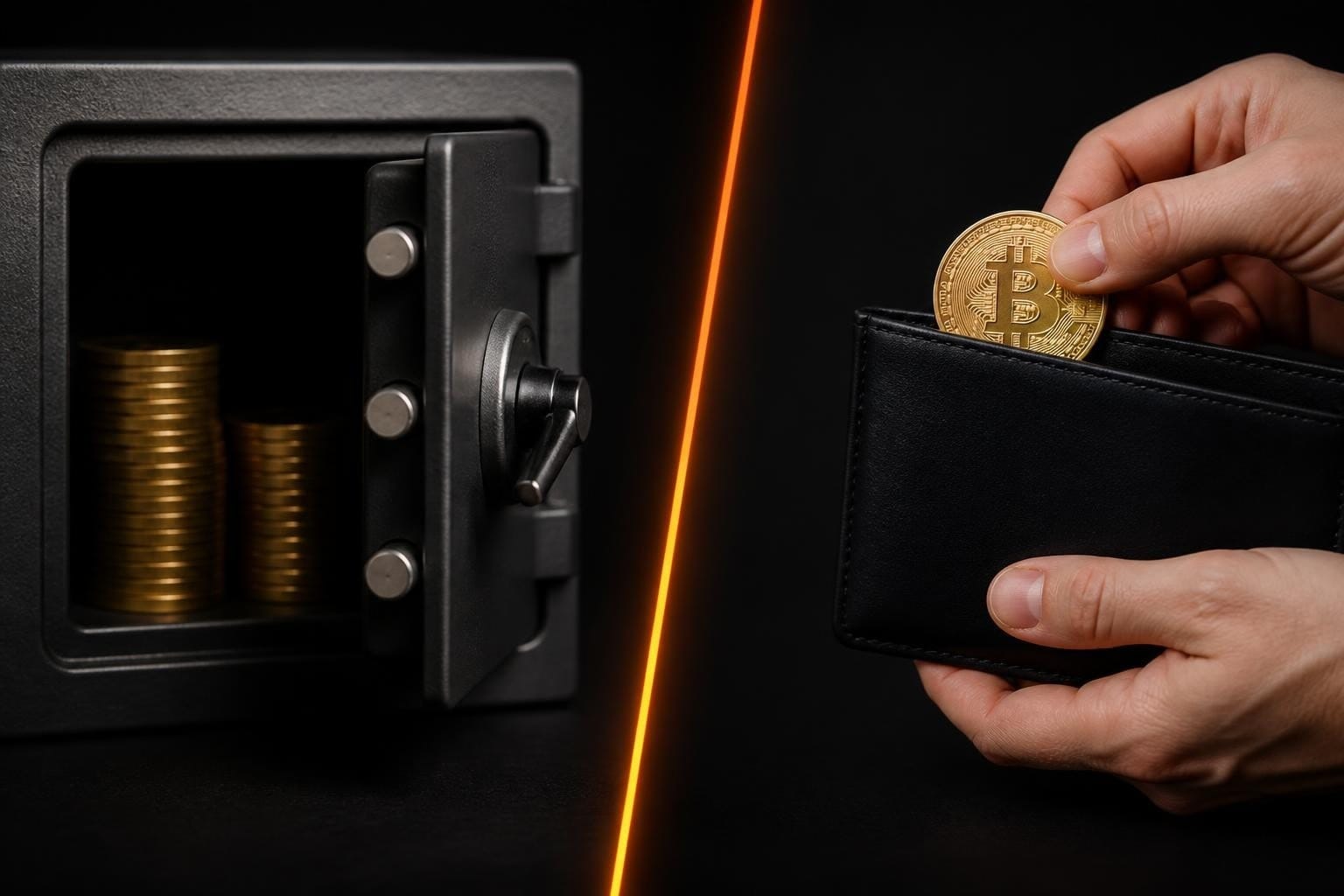
The custodial non custodial debate boils down to one question: who controls your private keys? In custodial wallets, a third party holds your keys and manages transactions on your behalf. In non-custodial wallets, you own the keys and bear full responsibility for security and access. This distinction matters more in 2026 than ever before as regulatory frameworks tighten and privacy tools become essential for financial sovereignty.
The choice between these models shapes everything from transaction privacy to recovery options. Each approach carries distinct risks and benefits that affect how you interact with cryptocurrency networks.
How Custodial Wallets Work
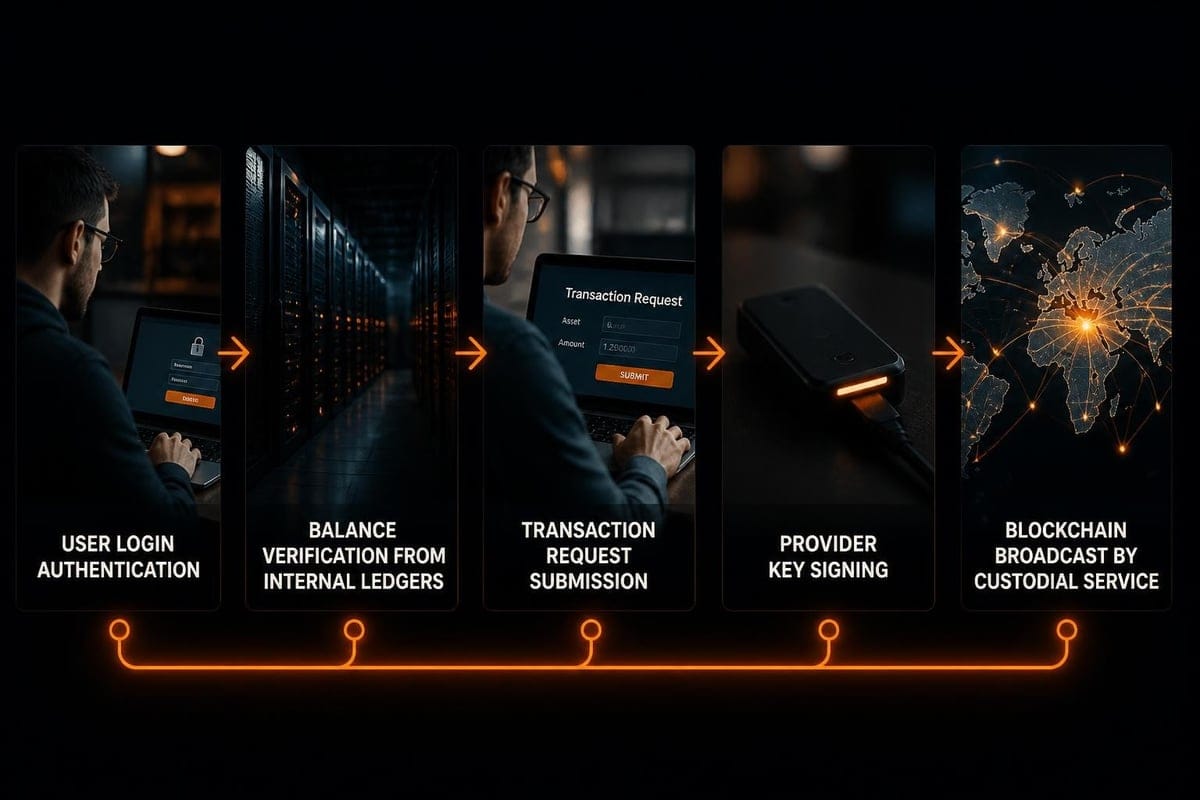
Custodial wallets function like traditional bank accounts. An exchange or wallet provider holds your private keys in their infrastructure. You log in with a username and password to access funds, but the company executes transactions from keys you never see.
When you deposit crypto into a custodial service, you're transferring ownership to that entity. They maintain internal ledgers tracking your balance. Withdrawals require their approval and processing through whatever security measures they've implemented.
Common custodial services include:
- Centralized exchanges (Coinbase, Binance, Kraken)
- Web wallets with password recovery
- Custodial payment processors
- Managed investment platforms
The provider handles all technical complexity. They manage backups, implement security protocols, and maintain uptime. You trust them to safeguard assets and process requests accurately.
Why People Choose Custodial Services
Convenience drives adoption. Most users don't want to manage seed phrases or understand cryptographic signing. Custodial wallets offer password resets, customer support, and familiar interfaces.
Recovery proves straightforward when you forget credentials. The provider implements account recovery through email verification, document scans, or support tickets. You never risk losing funds because you lost a piece of paper.
Regulatory compliance becomes someone else's problem. The custodian files tax reports, implements AML procedures, and navigates jurisdictional requirements. For institutional users, this removes significant operational burden.
Non-Custodial Architecture and Control
Non-custodial wallets give users complete key ownership. The software generates a private key on your device that never leaves your control. You sign transactions locally before broadcasting to the network.
Stripe's comparison of wallet models explains how this architecture eliminates intermediaries from the transaction path. No company can freeze your account, reverse transactions, or require permission for withdrawals.
Popular non-custodial options include hardware wallets like Ledger and Trezor, software wallets like Electrum and Feather, and browser extensions like MetaMask. Each manages keys differently but shares the core principle: users hold the keys.
Security Responsibilities Shift to Users
Non-custodial systems require careful key management. You write down a seed phrase during wallet setup. This 12 or 24 word sequence reconstructs your private key on any compatible wallet.
Losing this seed phrase means permanent fund loss. No customer support can help. No password reset exists. The blockchain doesn't care about proof of ownership without cryptographic signatures.
Key security practices for non-custodial users:
- Write seed phrases on paper or metal, never digitally
- Store backups in multiple physical locations
- Verify receiving addresses before confirming transactions
- Use hardware wallets for significant holdings
- Test recovery procedures with small amounts first
Phishing attacks target non-custodial users aggressively. Malicious websites mimic legitimate wallet interfaces to steal seed phrases. Users must verify URLs, check application signatures, and maintain strict operational security.
Privacy Implications of Each Model
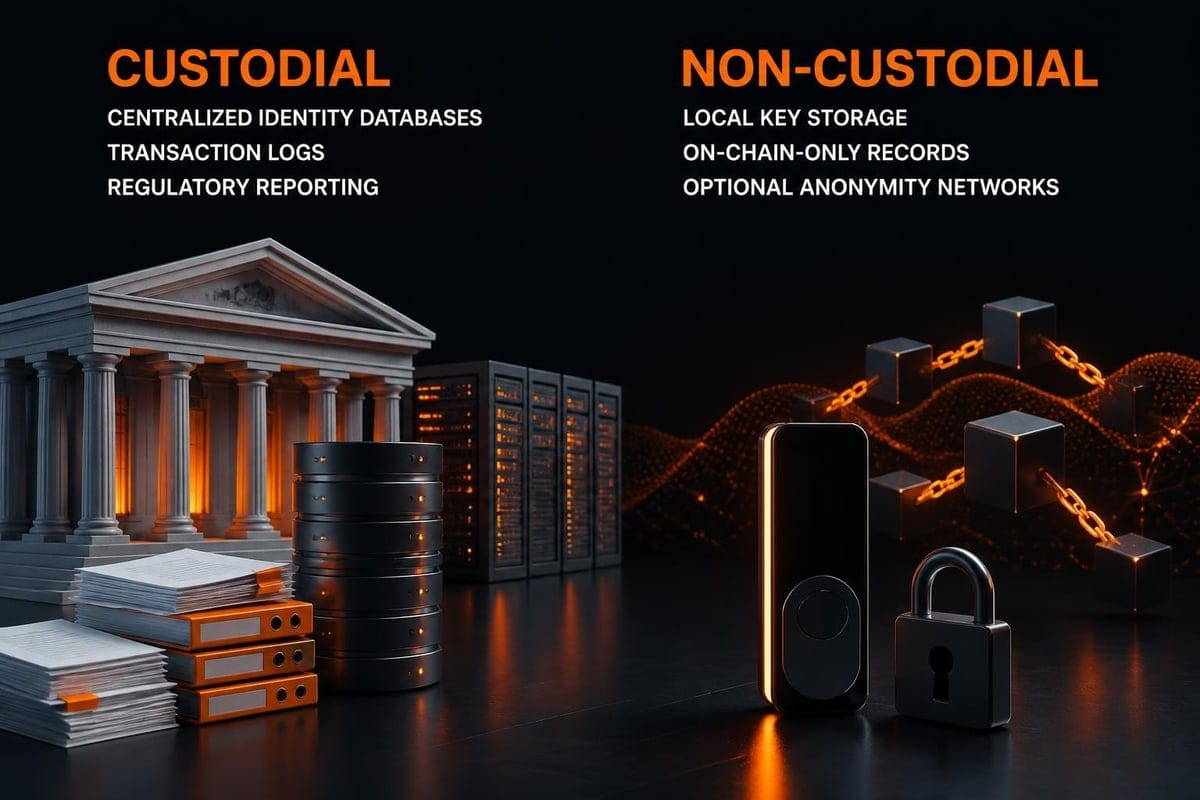
The custodial non custodial distinction fundamentally shapes transaction privacy. Custodial services create comprehensive surveillance records. They log IP addresses, link transactions to verified identities, and share data with regulators.
An exchange asks for a document scan and a selfie before allowing withdrawals. They connect your real identity to every transaction passing through their platform. This metadata persists indefinitely in company databases and government records.
Global regulatory frameworks increasingly mandate these practices. Financial Stability Board guidance pushes custodians toward enhanced monitoring and reporting. Privacy erodes as compliance requirements expand.
Non-custodial wallets operated correctly reveal minimal information. You generate addresses locally, sign transactions offline, and broadcast through anonymous networks. No identity verification occurs. No central database links you to specific UTXOs.
| Privacy Factor | Custodial | Non-Custodial |
|---|---|---|
| Identity verification | Required | None |
| Transaction history | Fully logged | Only on-chain |
| IP address collection | Standard | Avoidable |
| Third-party data sharing | Mandatory | Impossible |
| Cross-transaction linking | Trivial | Requires chain analysis |
Services like MoneroSwap demonstrate non-custodial privacy in practice. The platform never requests user data, retains no logs, and requires no account creation. Swapping USDT to XMR happens without revealing identity to any intermediary.
Regulatory Pressure and Compliance Requirements
Custodial services face mounting regulatory demands. They must implement KYC procedures, file suspicious activity reports, and comply with sanctions lists. Operating legally in most jurisdictions requires these measures.
The Travel Rule requires custodians to share sender and recipient information for transactions above certain thresholds. This cross-provider data sharing eliminates privacy even between compliant services. Your exchange tells their exchange who sent funds and why.
Non-custodial tools exist outside this framework. Wallet software doesn't fall under money transmitter regulations in most places. Users transacting peer-to-peer don't trigger reporting requirements that apply to businesses.
Regulators notice this gap. Proposed rules attempt to extend compliance obligations to non-custodial software developers or require hosted wallet providers to verify counterparty addresses. The 2026 regulatory landscape makes privacy-preserving self-custody increasingly valuable as authorities tighten controls.
Hybrid Models and Middle Grounds
Some architectures blur the custodial non custodial boundary. Multi-signature wallets split key control between user and service provider. Both parties must approve transactions, creating shared custody.
Secure Multi-Party Computation approaches enable collaborative key management without any single entity holding complete keys. The private key exists only as distributed shares across multiple parties. Transactions require threshold numbers of shares to sign.
MPC custody characteristics:
- No single point of key compromise
- Service provider cannot unilaterally move funds
- User cannot lose access from single backup failure
- More complex recovery procedures than pure custodial
- Still requires some trust in provider implementation
Smart contract wallets offer programmable custody rules. Account abstraction models let users define spending limits, require multiple approvers, or implement time locks. These features add safety while maintaining non-custodial architecture.
Research into hybrid wallet designs explores cryptographic schemes that preserve user sovereignty while reducing key management burden. These systems remain experimental but address real usability challenges in pure non-custodial models.
Operational Trade-offs and Performance
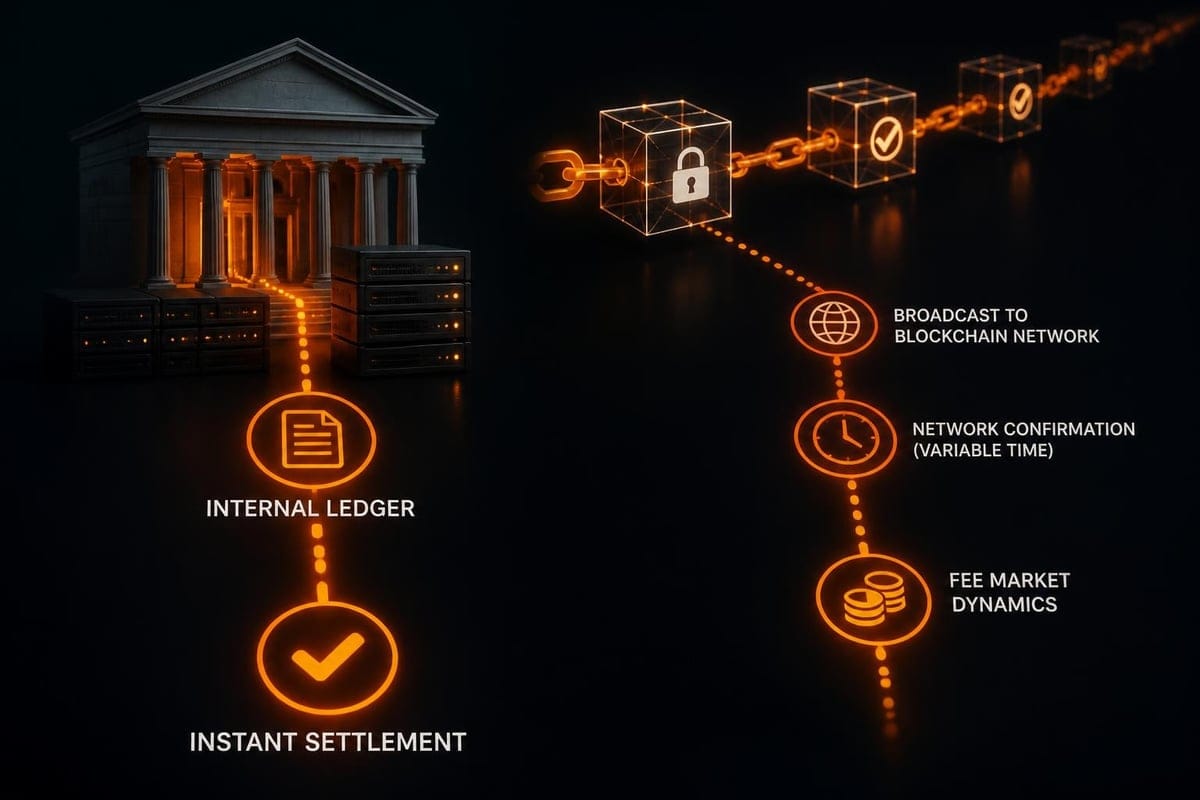
Custodial platforms process transactions faster from a user perspective. Internal transfers between users on the same platform happen instantly in their database. No blockchain confirmation required.
They batch on-chain withdrawals to reduce fees. Rather than broadcasting individual transactions, custodians aggregate hundreds of withdrawals into single transactions with many outputs. Users share fees, lowering costs.
Non-custodial transactions pay market rates. You broadcast directly to the network and compete with other users for block space. During congestion, this means higher fees and slower confirmation than custodial alternatives.
Transaction characteristics comparison:
| Feature | Custodial | Non-Custodial |
|---|---|---|
| Confirmation speed | Instant (internal) | Network dependent |
| Fee structure | Batched/discounted | Full market rate |
| Transaction reversibility | Possible (provider discretion) | Impossible after broadcast |
| Spend limits | Provider enforced | User controlled |
| Operating hours | 24/7 but may pause | Always available |
Advanced non-custodial users mitigate some disadvantages. Swapping between chains through atomic swap protocols eliminates custodial exchange risk while maintaining reasonable fees. Lightning Network integration provides instant Bitcoin transactions with non-custodial security.
Risk Profiles and Asset Protection
Custodial services concentrate risk. When an exchange fails, all user funds disappear simultaneously. Mt. Gox, QuadrigaCX, FTX, and dozens of smaller platforms demonstrate this pattern. Users become unsecured creditors in bankruptcy proceedings.
Hacks targeting custodial infrastructure yield massive losses. A single compromised private key grants access to thousands of user accounts. Security teams face constant sophisticated attacks against centralized honeypots worth millions or billions.
Regulatory seizure represents another custodial risk. Governments can freeze accounts, seize funds, or shut down services. Users have no recourse when authorities act against their provider. Even compliant operations face this threat.
Non-custodial users face different risks. Losing seed phrases means permanent loss. Phishing attacks steal keys from individual users. Malware targets wallet software. But these risks don't scale. Each user's failure affects only their funds.
NIST wallet guidance addresses security considerations across models. Standards bodies recognize that appropriate choice depends on user sophistication, asset amounts, and threat models.
Risk distribution by model:
- Custodial: Concentrated, systemic, regulatory
- Non-Custodial: Distributed, individual, operational
For privacy-focused users, custodial risk extends beyond fund loss. Data breaches expose transaction histories, identity documents, and personal information. This metadata leakage can't be undone even if funds remain safe.
Market Adoption and User Preferences
Recent wallet adoption statistics show custodial solutions dominate by user count. Most people entering crypto start with exchange accounts. The learning curve and responsibility of self-custody intimidate newcomers.
Institutional adoption follows a different pattern. Large holders increasingly demand non-custodial solutions with institutional-grade security. Multi-sig vaults, hardware security modules, and geographic key distribution address custody concerns while maintaining control.
The custodial non custodial split correlates with several factors:
- Asset size: Larger holdings push toward non-custodial
- Technical sophistication: Power users prefer self-custody
- Privacy priorities: Anonymity requires non-custodial tools
- Regulatory environment: Restrictive jurisdictions increase non-custodial appeal
- Use case: Active trading suits custodial, holding suits non-custodial
Privacy-conscious users overwhelmingly choose non-custodial options. The mere existence of custodial records creates unacceptable surveillance risk for this segment. Exchanging ETH for XMR without accounts or logs becomes essential rather than optional.
Technical Implementation Considerations
Building custodial infrastructure requires extensive engineering. Hot wallets maintain connectivity for transaction processing while cold storage secures the majority of funds. Regular audits verify that claimed reserves match actual holdings.
Insurance, legal structures, and operational security add complexity. Custodians must protect against internal threats, implement access controls, and maintain disaster recovery systems. The technical debt compounds as the system scales.
Non-custodial development focuses on key derivation standards, transaction signing, and network communication. Wallet software itself holds no funds. Security vulnerabilities affect individual users running compromised versions rather than entire platforms.
Open source non-custodial tools enable community auditing. MoneroSwap's open source approach lets users verify code, check for backdoors, and run their own instances. This transparency proves impossible for custodial services protecting proprietary infrastructure.
Making the Right Choice for Your Needs
Your optimal wallet model depends on specific requirements. Custodial solutions make sense for small amounts, frequent trading, or users unwilling to manage keys. The convenience and recovery options outweigh custody risks for many scenarios.
Non-custodial becomes essential when privacy matters. If transaction surveillance, identity linkage, or regulatory reporting concern you, self-custody is non-negotiable. The technical challenges are worth the sovereignty gained.
Choosing factors to evaluate:
- How much are you holding?
- What's your technical comfort level?
- Do you need transaction privacy?
- How often do you transact?
- What regulatory jurisdiction applies?
- Can you safely store backup seed phrases?
Consider using both models for different purposes. Keep trading funds in custodial exchanges for convenience while storing long-term holdings in non-custodial cold storage. This hybrid approach balances usability and security.
The custodial non custodial distinction will sharpen as 2026 progresses. Regulatory pressure pushes custodians toward more invasive monitoring. Privacy-preserving non-custodial tools respond with better usability and stronger anonymity features. Understanding both models helps you navigate this evolving landscape effectively.
The custodial non custodial choice shapes your financial privacy, security, and autonomy in fundamental ways. Each model serves different needs, but privacy-focused users benefit most from non-custodial approaches that eliminate surveillance by design. When you need to swap cryptocurrencies without KYC, MoneroSwap provides a fully non-custodial solution with no registration, no log retention, and Tor compatibility for complete transaction privacy.
Swap into or out of Monero, no KYC
MoneroSwap is a Monero swap with no account with no account, no KYC, and no logs. Open source and available over Tor. Verify every claim, then swap BTC to Monero, ETH to Monero, USDT to Monero, or see all pairs. New here? Start with the FAQ.
← All guides